
Looking Both Ways

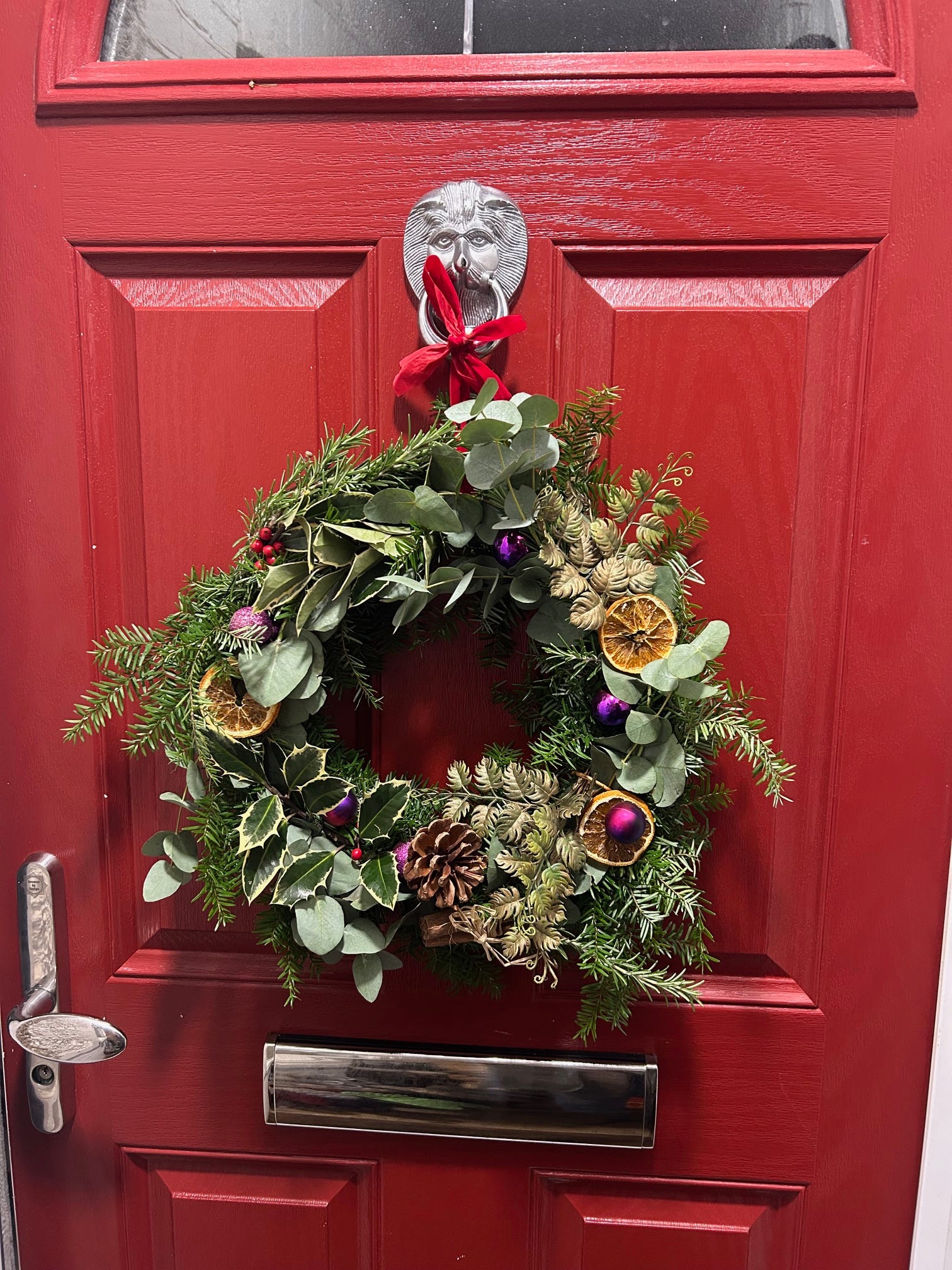
And so another Winter Solstice rolls around, bringing to a close a year which seems to have passed inordinately quickly.
I’ve written before about thirteen moons and having now run several cycles of my local women’s circle, I’ve been reading, writing and thinking about this some more. I’ve also become alive to the practice of ‘Rauhnächte’; a period of introspection which runs from 25th December to 6th January or for some, the 21st December to the 2nd January. I prefer the latter, as I’ve never followed the tradition of leaving my winter decorations up until 6th January; choosing instead to rip them down on the 2nd. There feels to me a natural pause at this time; the drawing of a line between the celebration of the returning of the light and the remaining time we must pass before the light returns to us. At this time of year, the veil between the two worlds is again at its thinnest (this also happens at Samhain, on October 31st, which has become known as Hallow’een), and we can use it to reflect, to plan and to set intention for the coming year.
The Truth Inside is a reader-supported publication. To receive new posts and support my work, consider becoming a free or paid subscriber.
In many indigenous cultures, a traditional calendar was observed based on 13 moon cycles per year. This aligns with the moon’s orbit and with seasonal changes as they occur throughout the earth. Here’s the maths: a lunar cycle is approximately 28 days in length, and 13 cycles (13 x 28 = 364) are more or less in synch with the solar year. Ever heard of a ‘blue moon’? These occur every 3 years or so in order to keep the calendar in synch with the seasons. A woman’s menstrual cycle occurs roughly once every 28 days, making thirteen in a year, perfectly in line with the moon.
Under the old arrangement, there were thirteen moons, in line with lunar energy and the feminine, meaning that there would not have been an odd collection of days (referred to nowadays as Twixtmas) running from solstice to the beginning of January.
When we look at the heavy weight of expectation of what we now know as ‘New Year’, it often feels at odds with how we feel physically and emotionally. If you’ve ever gone all guns blazing into January with a new gym membership, possibly hungover and battling lethargy and a heavy dose of shame, you will know what I mean. In the pagan calendar, January is not meant for action. It is a time of hibernation, going within, reflection and planning before we begin to re-emerge alongside the natural world at the beginning of February, when Imbolc arrives. To me, this is the real ‘new year’, and it is recognised by other cultures as such. In East Asian cultures, it falls around the lunar new year in February. For Iranian/Persians, Kurds and Central Asians there is Nowruz, which falls around the Spring Equinox in mid March, and for Sikhs there is Vaisakhi on March 14th.
In 45 BCE, it was the Romans under Julius Caesar who first initiated the 10-month solar calendar, which was later adjusted to 12 months, many of which were named for their gods and goddesses. I don’t know about you, but whenever I think of the Romans I think of a particularly patriarchal society, with laws and rigidity and rule, all played out under a blazing sun. When the Romans invented their sun-influenced calendar I doubt that it occurred to them that they were severing a connection to the feminine, to the lunar cycle and to the natural world. Or perhaps it did.
Viewed through this lens, the odd collection of days in between the celebrations of Christmas and New Year now make more sense. In practical terms, these are the days upon which none of us know which day it is, when the bins are being collected, whether we are supposed to be resting, working or socialising -we simply don’t know what to do. Perhaps this is because these days became ‘lost’ when our calendar succumbed to rearrangement. Rauhnächte allows this time to spent fruitfully and thoughtfully and in a time where feminine practices and wisdom are again coming to the fore, they are having, as it were, their moment in the sun.
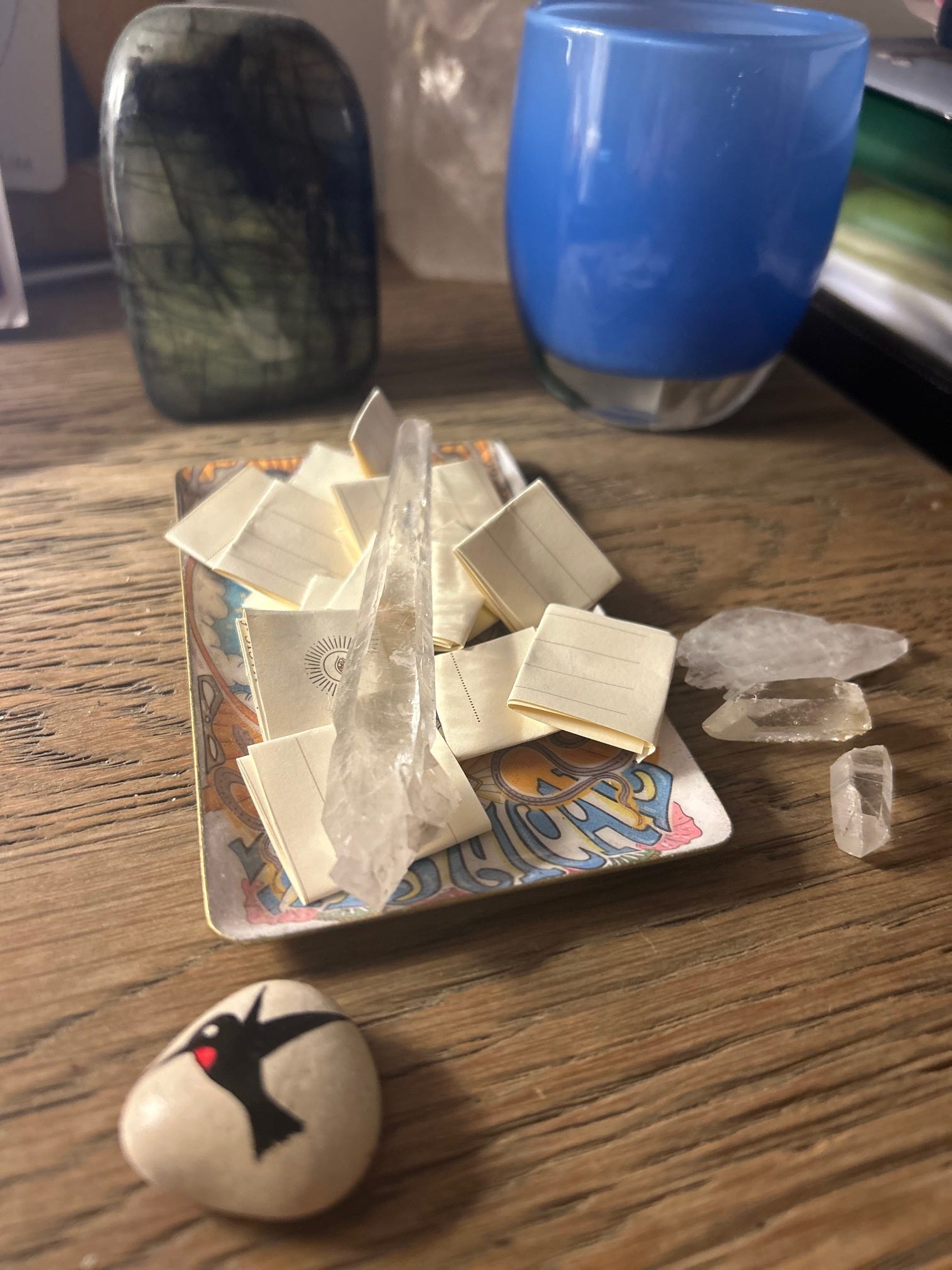
To participate in Rauhnächte: write out by hand thirteen separate intentions for the year ahead and fold the pieces of paper tightly. Each night from the 21st December to the 2nd January take one folded piece of paper, do not look at it, and burn it safely – in a candle flame, or on a fire. If this is not safe or desirable for you to do, you can bury it in the earth. Do this on twelve consecutive nights and on the thirteenth, open and read the final intention before burning or burying it as before. This will mark the main intention for the year ahead. I use this to pinpoint a focus for my journaling; something to come back to and reference each month.
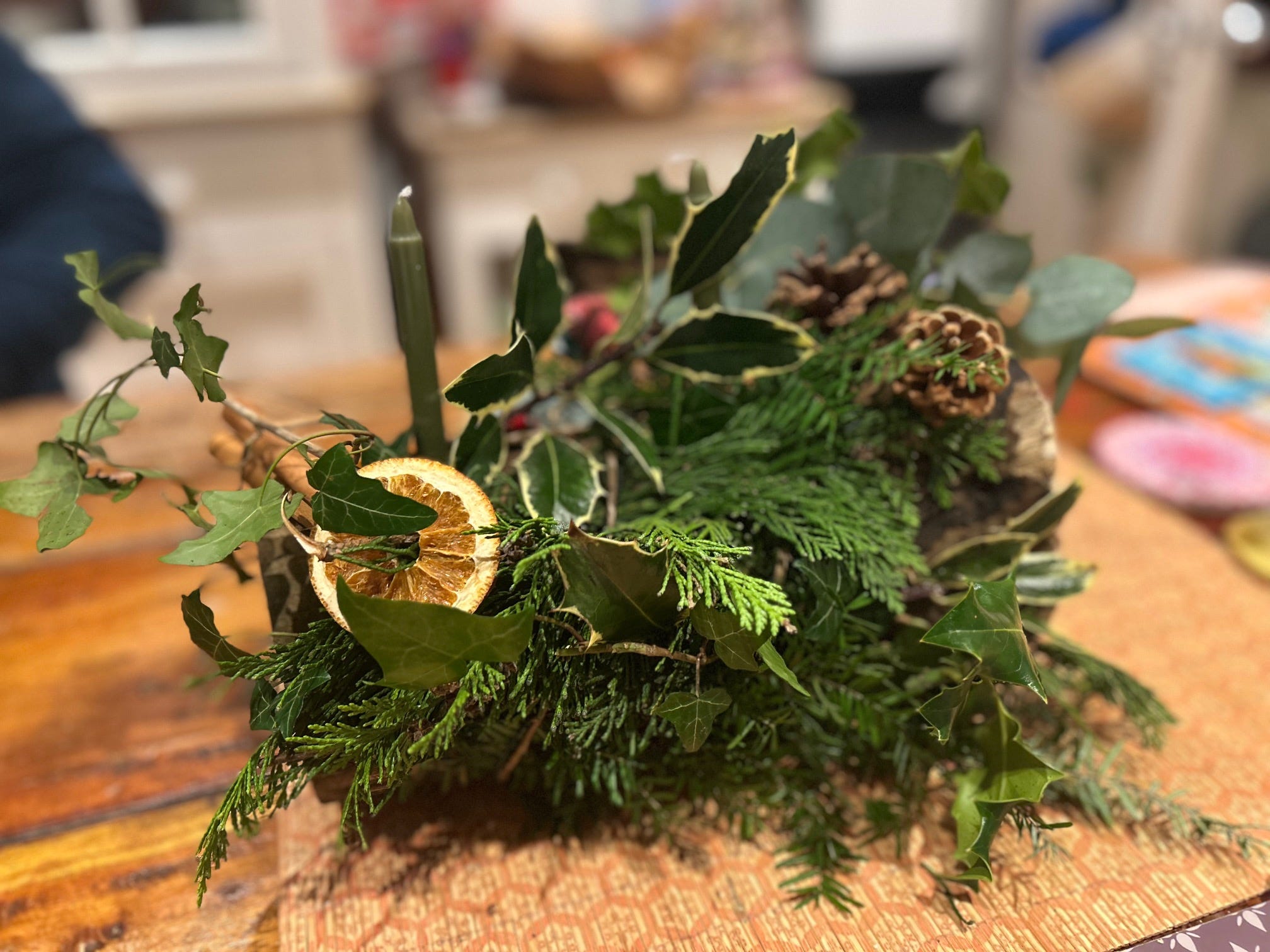
For many years, I have made a Yule log from foraged greenery and placed it in the centre of my table. Other rituals I love at this time of year are to journal my releases and intentions for the past and coming years, and the treatment of January as an opportunity for an introspective journey; a hibernation during which I nourish my soul, look within, take stock and plan my re emergence at the time of Imbolc, around 2nd February, when the world begins to awaken. I stack up books to read, make sure I have logs for the fire and a good supply of cacao and tea, and look forward to time spent reading, writing and digesting.
Looking back over this past year I am reminded of the year that came before, during which I had the privilege of accepting a magical invitation to visit Santa Fe to attend the 20-year anniversary gathering of the International Council of Thirteen Indigenous Grandmothers (there’s that number again). I brought back with me a beautiful terracotta ‘Grandmother Turtle’ figurine. Turtles have thirteen scales, or ‘scutes’ on the backs of their shells, said to symbolise the 13 moon cycles and reflecting back the connection to the natural world. I bring this Grandmother Turtle to our circle each week and she sits with us, quietly dispensing her magic. She has overseen this year’s major intention: to set up and participate in a women’s circle for development of intuition. I have loved sharing what I have learned over almost three decades of psychic development and mediumship practice.
And so my 2026 will begin with a mediumship development course I have been wanting to participate in for a long time. I am a firm believer that the teacher must always continue to be the student. While engaging in the planning stages for this course I have taken time to ‘clear’ both my physical and emotional spaces. I began with another ritual I’ve often encouraged my children to do before the festive period begins: clearing out old, unused or broken items we no longer use or need. They are either fixed, passed on or recycled. This leaves space for the new. This week, I’ve let go of several chipped mugs I’ve been holding on to (for some reason I get very attached to mugs!), a box of books and some clothing that no longer fits or doesn’t suit me. I also thought carefully about giving myself something talismanic to mark the turn of the year; something connected to my course of study and commitment to my teaching and mediumship work and eventually decided on a circular pendant engraved with thirteen moons. What better reminder of my purpose, respect for the old ways and a calendar better suited to the strength of women.
This year, I made yule logs with women from my circle, which was a real treat. I also had the pleasure of creating wreaths with a dear friend and other women she had invited to her home.
When I reflect on a year in which the world appears to be burning, I emerge with hope: that the continued desire of women to gather, create and share will provide much-needed balance and wisdom. Certainly on a personal level this year, I have learned that ‘womening’ is good for the soul.
To all those who mark it: a joyful Solstice and restful hibernation before the return to the light.
Thanks for reading The Truth Inside! This post is public so feel free to share it.